The short version
I recently spent an office hour mentoring the finalists of the Global Founders Showcase at the 2026 IEEE Tech Summit: Ethical AI in Budapest. Ten teams, every one of them building an ethical-AI use case. The single idea that landed hardest: "ethical AI" is not a value statement — it is a set of engineering decisions. Each summit theme maps onto something concrete you either put in your architecture or you don't. Here are the six, plus the reusable frameworks I gave the room.
I. THE SIX: PRINCIPLES → ARCHITECTURE
"Ethical AI" can sound like a poster on the wall. To me it's six engineering decisions. Each principle the summit cares about becomes a specific thing you build — or a specific gap a buyer's security team will find.
| The principle… | …becomes this engineering decision |
|---|---|
| Bias & fairness | Representative eval sets and subgroup metrics you actually test in CI |
| Transparency | Source attribution and explainable retrieval paths (what GraphRAG gives you) |
| Accountability | Immutable audit logs — who asked what, and which sources were used |
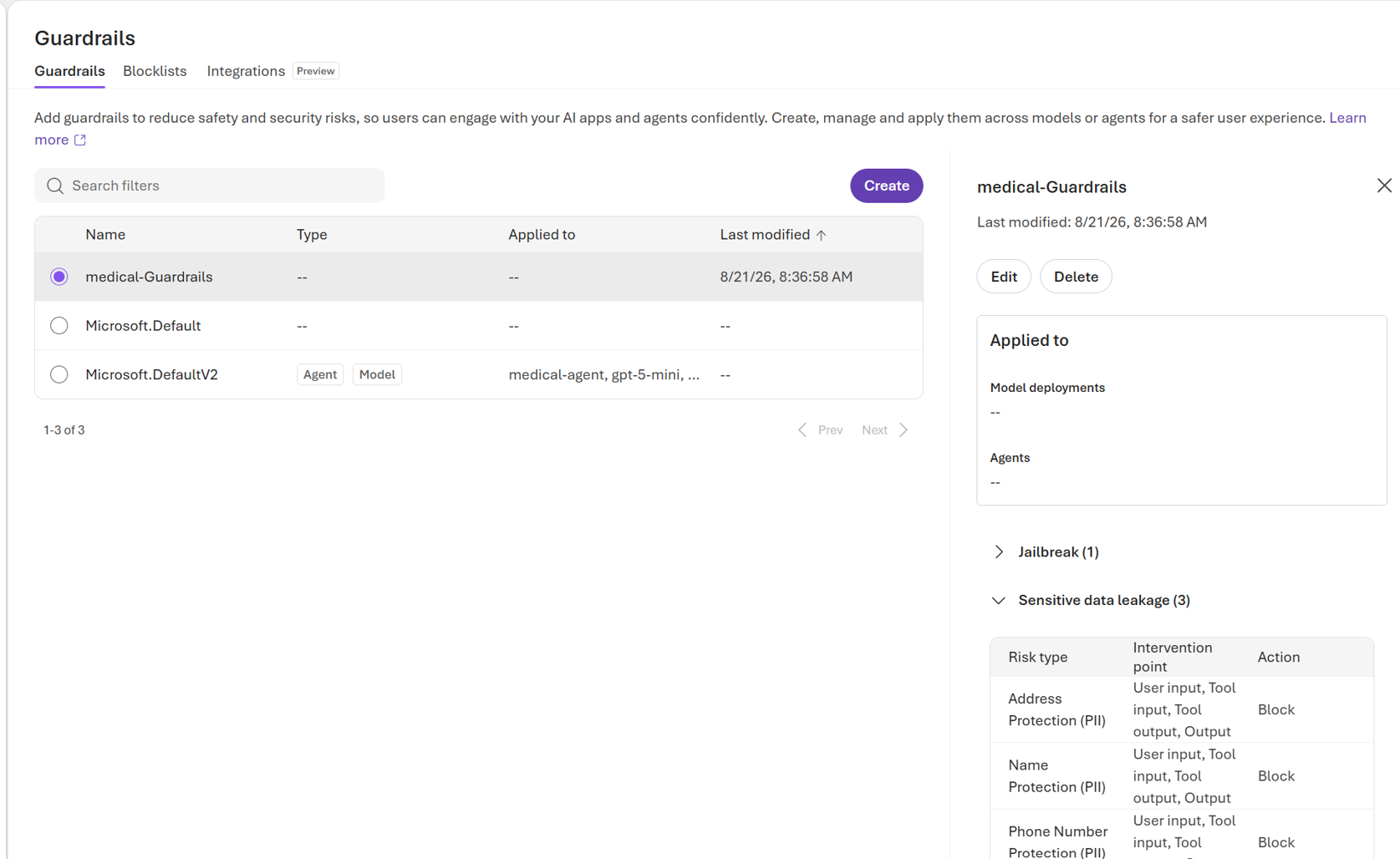
| Privacy & data responsibility | PII redaction, data residency, and sovereign / air-gapped options |
| Misinformation | Grounding and the discipline to abstain — say "insufficient evidence" instead of guessing |
| Human-centered AI | A human in the loop at the stakes line, with explanations the user can see |
So when I say "ethical," I don't mean slower. I mean these six things live in your architecture, not in a slide deck for regulators. The rest of this piece is the toolkit that makes each one real.
II. THE PRODUCTION GAP
Before ethics, there's a more basic problem: most AI demos never ship. Ninety percent of demos work on stage. Then someone asks "is this production-ready?" and everything the demo quietly skipped shows up in the right-hand column.
| The POC shows… | Production also demands… |
|---|---|
| A model answering a prompt | Grounding in your data with citations |
| "It worked in the notebook" | Audit trail a compliance reviewer can act on |
| One user, your login | Identity + RBAC at the boundary |
| In-memory state | Externalized, durable state |
| Happy-path calls | Resilience to bad input, throttling, tool failures |
| "Trust me, it's fine" | Observability — logs, traces, evals |
| Runs somewhere | Data residency you can prove |
The headline for founders: the differentiator is the architecture, not the model. Everyone has access to the same models. You win on the right-hand column — and three of those rows (grounding, audit, residency) are really one idea: trust.
III. RAG vs GraphRAG
The engine that makes an answer auditable is retrieval. Most teams use plain RAG: embed docs, retrieve top-k chunks, stuff them into context, answer. Great for single-fact lookups — but it breaks in three ways:
- Multi-hop questions where you must connect A to C through B.
- Chunk boundaries that sever the relationships that carry the meaning.
- Approximate citations — near the answer, not proof of it. When retrieval is weak, the model confidently fills the gap. That's your hallucination.
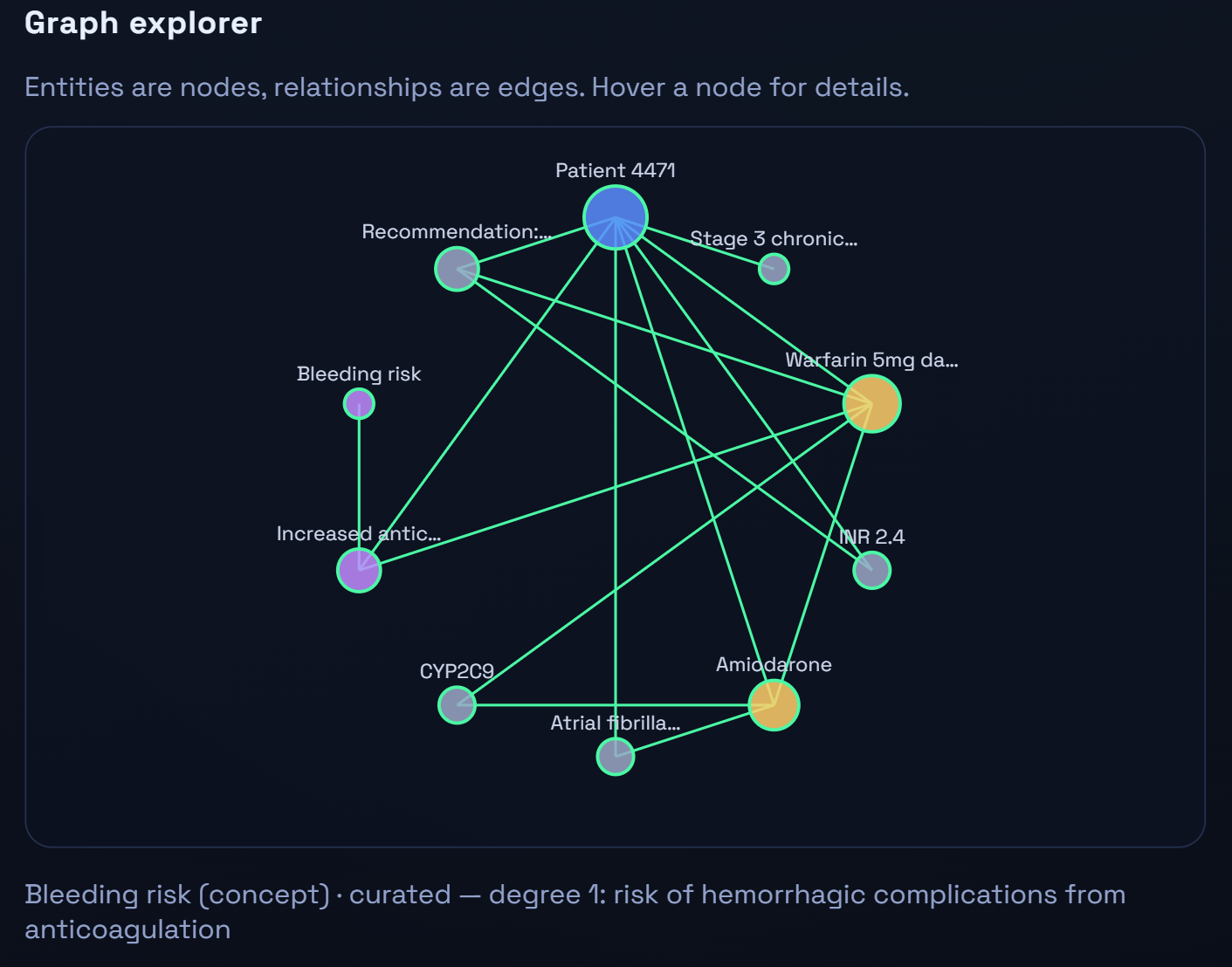
GraphRAG fixes the structure. You build a knowledge graph of entities and relationships, retrieve over the graph and vectors together, and traverse explicit paths — real multi-hop reasoning. Because every claim links to a specific node, you get end-to-end attribution: an auditable answer. And when there's no path to support a claim, the system can say "I don't know" instead of inventing one.
Rule of thumb: if your value is in the connections in your data — not isolated facts — you probably want a graph.
IV. HALLUCINATION CONTROL — 6 PATTERNS
You don't prompt away hallucination — you engineer it out. Six patterns, meant to be stacked:
- Ground everything — no answer without retrieved evidence; empty retrieval means refuse or escalate, not guess.
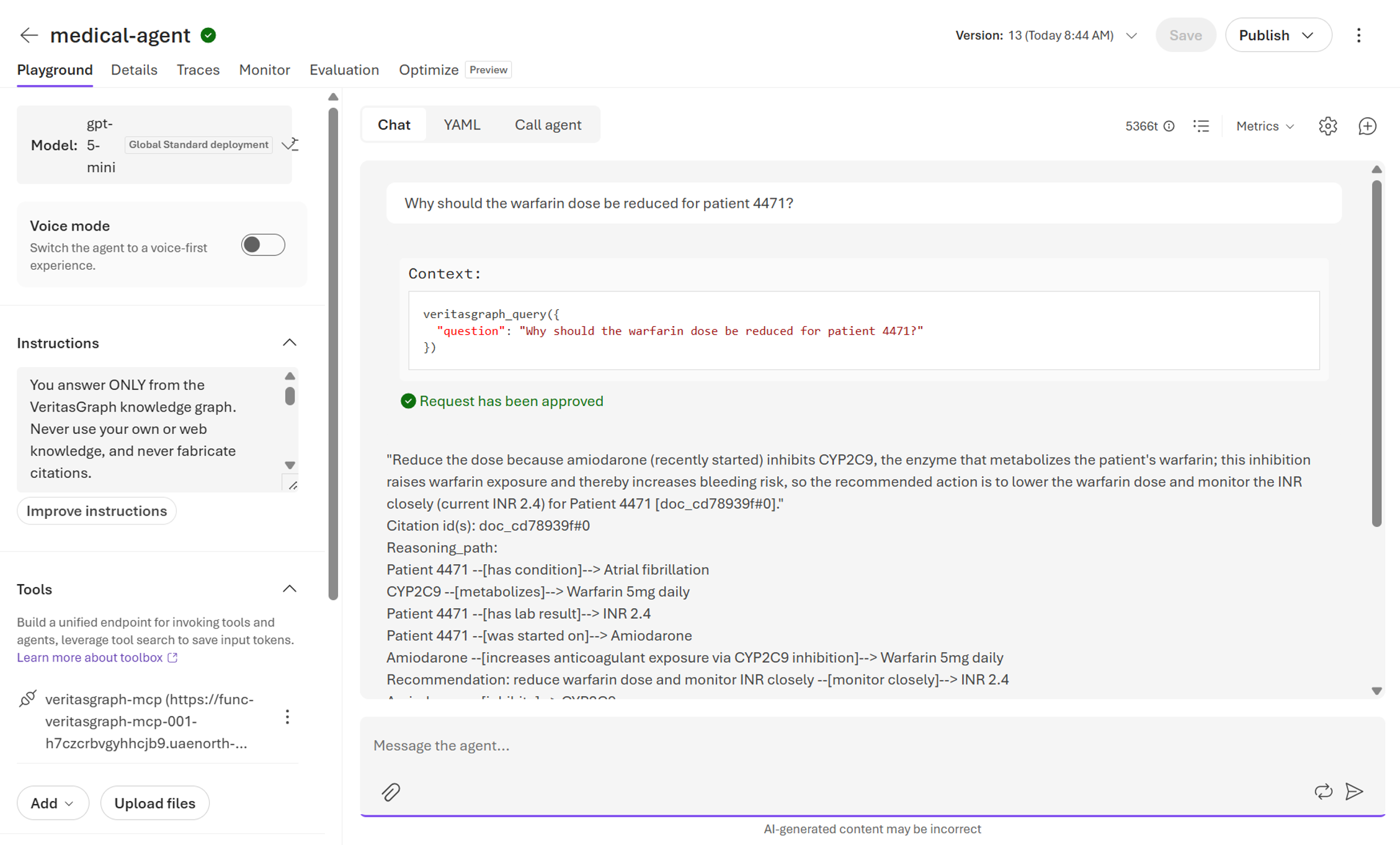
- Attribute every claim at the sentence level, and validate that the cited passage actually supports it.
- Constrain the output with typed or schema-validated responses — the model fills a structure it can't silently break.
- Verify with a second pass — a checker, a judge model, or an eval confirms claims are supported before the user sees them.
- Human-in-the-loop at the stakes line — route consequential or low-confidence answers to a person, and log the override.
- Measure continuously — golden-set evals and drift monitoring in production.
You don't need all six on day one. Start with grounding and attribution; add verification and evals as you approach production.
V. WHAT THIS LOOKS LIKE, FOR REAL
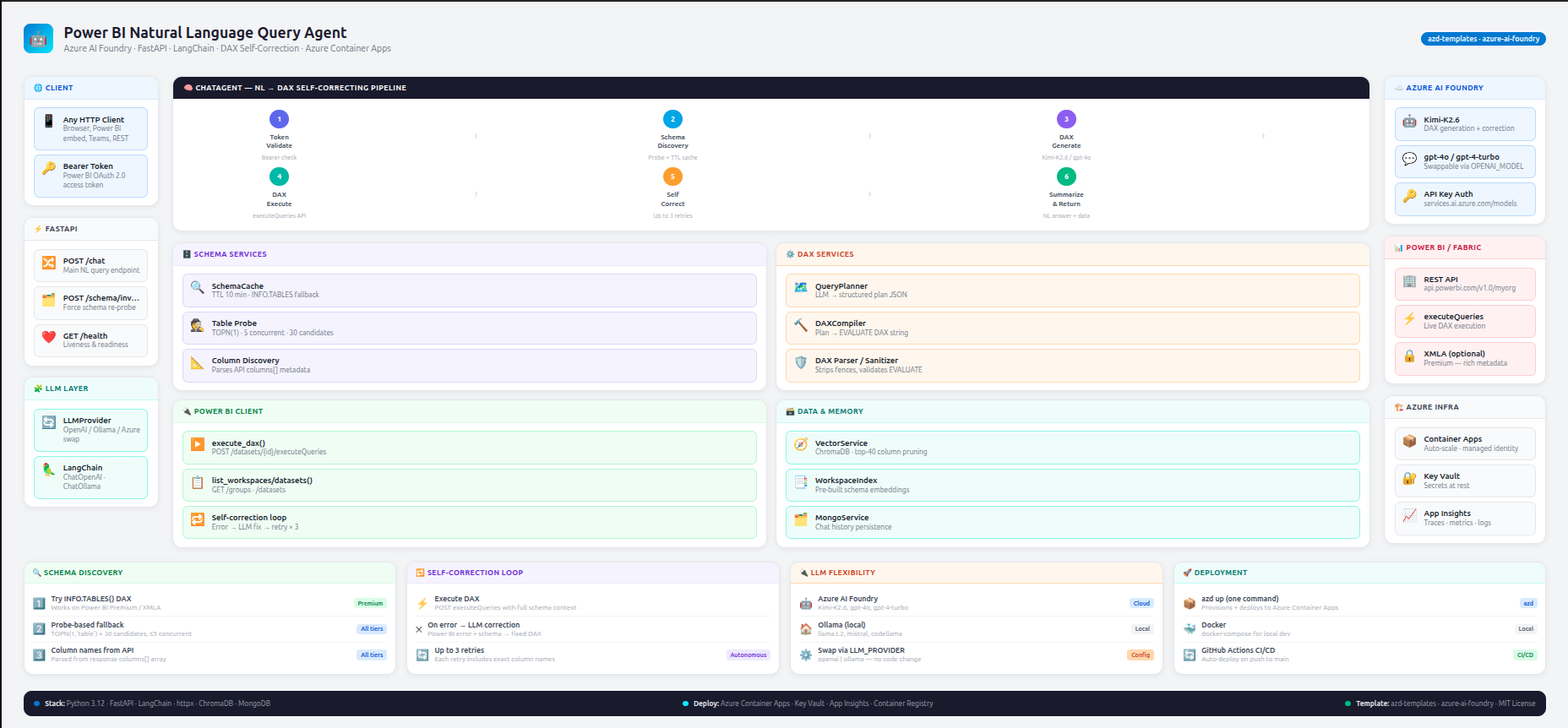
None of the above is theory for me — it's what I build in VeritasGraph, an open-source GraphRAG framework for governed, on-prem AI. These are actual screens, not mock-ups.
VI. THE SHIP-IT CHECKLIST
Screenshot this one. Before you tell a customer "it's production-ready," walk these two columns. If you can't tick a box, that's not a failure — it's your roadmap.
Trust & correctness
- ✓Grounded answers with claim-level citations
- ✓An 'I don't know' path that actually works
- ✓Golden-set evals in CI, with drift monitored
- ✓Human-in-the-loop on high-stakes paths
- ✓PII and data handling reviewed
Operations & compliance
- ✓Identity + RBAC at the boundary
- ✓Durable, externalized state
- ✓Resilience — retries, timeouts, fallbacks
- ✓Observability — logs, traces, cost, latency
- ✓A data-residency & audit trail you can prove
VII. GO-TO-MARKET BY STAGE
Same technology, very different priorities. Half the room were earlier-stage ideas, half were established startups — and they should be doing different things.
Earlier-stage ideas
- Win one painful, narrow use case — the wedge.
- Chase design partners over paying scale, for now.
- Get to a trustworthy demo on real data, fast.
- Rent your infra — do not build a platform yet.
- Tell the story of the problem, not the model.
Trap to avoid: over-building.
Established startups
- Trust, security, and compliance are your moat.
- An on-prem / sovereign option unlocks regulated accounts.
- Harden evals, SLAs, observability, and cost.
- Land-and-expand with reference customers and audits.
- Your story is proof, ROI, and risk reduction.
Trap to avoid: under-investing in trust.
Match the build to the stage. Borrow from the "established" column only when a real customer forces the requirement.
RECAP
Ethical AI isn't a slower AI — it's a better-engineered one. Representative evals, source attribution, immutable audit logs, PII and residency, grounding with the discipline to abstain, and a human in the loop at the stakes line. Close the production gap deliberately, ground your retrieval, engineer out hallucination, and match your go-to-market to your stage. That's how a demo becomes something a regulated customer will actually trust.
Bibin Prathap — Microsoft MVP (Azure AI)
Explainable, enterprise-secure AI for regulated sectors — GraphRAG, on-prem GenAI, and auditable decision intelligence. Mentor at the 2026 IEEE Tech Summit: Ethical AI, Global Founders Showcase.